2026-10-25 · Marcus Thompson
Detroit Permit Rules for Roll-Off Dumpsters on Residential Blocks
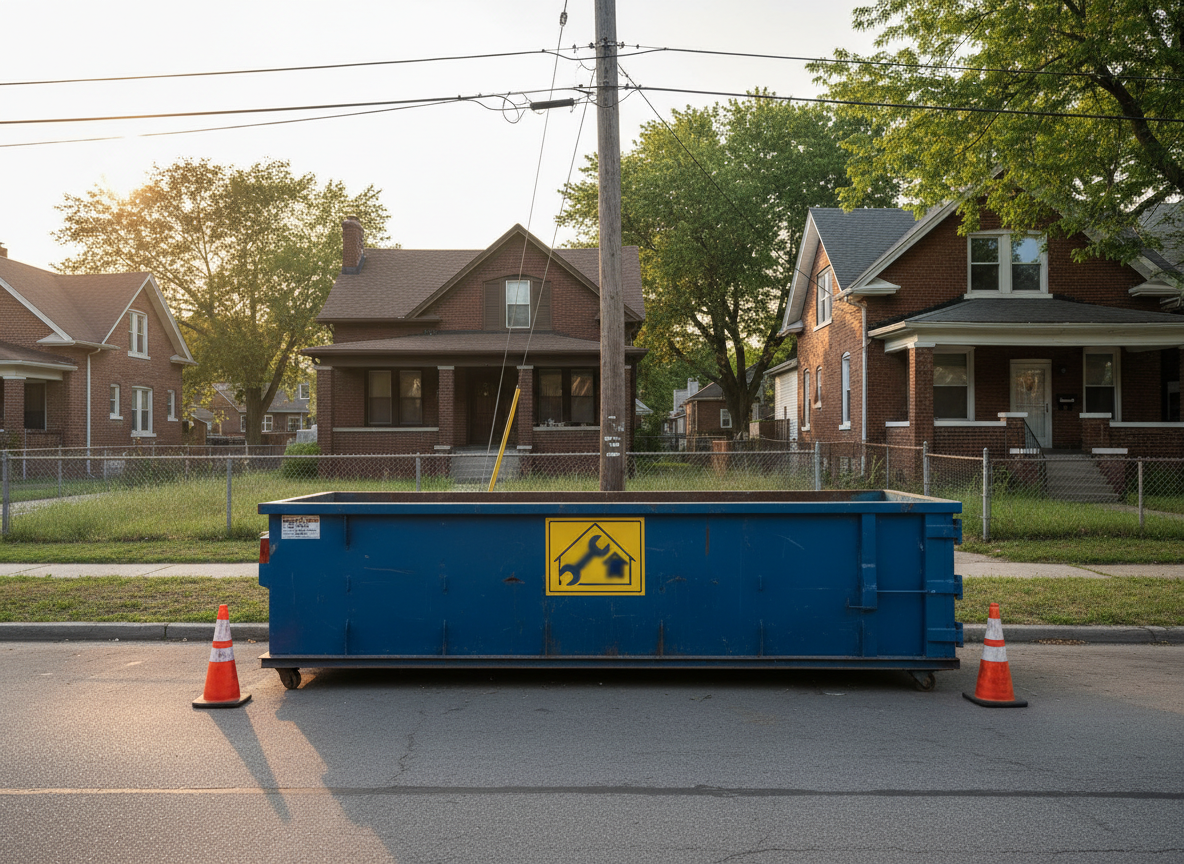
In Detroit, a permit from the city is required before placing a roll-off dumpster on a residential block whenever the unit will occupy any portion of the street or public right-of-way for more than a few hours. This rule applies across Wayne County neighborhoods from Corktown to Indian Village, where older housing stock often lacks wide driveways or side yards suitable for large containers. Property owners must check with the Department of Public Works before scheduling delivery, because violations can lead to immediate removal orders and added fees. The process accounts for Detroit's four distinct seasons, since snow accumulation in winter changes how crews position units and how long they can remain without blocking plows or emergency access.
Determining When a Permit Applies on Residential Blocks
Detroit treats any roll-off dumpster left on the street as an obstruction that needs approval, even for short-term residential projects. Homeowners in areas like Boston-Edison and Woodbridge frequently run into this because many lots were built before modern vehicles, leaving narrow alleys or no rear access. If the container stays entirely on private property such as a driveway or backyard, the permit requirement usually drops away. Street placement becomes necessary when crews cannot maneuver trucks into tight spaces common in Palmer Park or Mexicantown. Checking the exact address against city maps helps, because some blocks near Eastern Market have additional restrictions tied to historic district rules. Residents in nearby Hamtramck and Dearborn follow similar but separate municipal processes, so confirming the correct jurisdiction prevents delays during a kitchen or bath project.
Steps to Secure Approval Before Delivery
The first step is contacting Detroit's permitting office with the exact block location, dumpster size, and expected duration. Applications typically require a site sketch showing how the unit will sit without blocking fire hydrants or intersections, a common issue in dense blocks of Midtown. Approval times vary with seasonal workload, lengthening during spring cleanup periods when many residents schedule work after winter. Once granted, the permit must stay visible on the unit at all times. Crews from local providers coordinate delivery only after the document is in hand, because police or code enforcement can ticket unpermitted placements the same day. Keeping a copy of the approved paperwork on site avoids misunderstandings when neighbors raise concerns about the temporary obstruction.
Accounting for Detroit's Weather and Terrain
Four distinct seasons directly affect how long a permitted roll-off dumpster can remain on a residential block. Heavy snow in winter forces crews to position units farther from curbs so plows can pass, which sometimes means shifting the container into a driveway once the permit allows. Warm summers bring different challenges, including soft soil in older yards around Belle Isle Park that can cause loaded trucks to sink during pickup. Rain in spring and fall turns unpaved alleys in Corktown and Eastern Market muddy, requiring extra care when backing in for delivery. These conditions mean permit applications should note expected weather windows so inspectors understand realistic timelines. Linking placement decisions to actual seasonal patterns prevents the unit from becoming a hazard during Detroit's frequent freeze-thaw cycles.
Placement Realities in Specific Neighborhoods
Narrow streets in Corktown and Mexicantown often require the dumpster to sit partially on the roadway even when the project is residential, triggering the permit step early. In Indian Village and Boston-Edison, mature trees and historic curbs limit how far a truck can pull off the pavement, so crews request extra space in the permit description. Blocks near Comerica Park and Campus Martius Park see higher traffic, so permits may include time-of-day restrictions to avoid rush hours. Homeowners in Palmer Park and Woodbridge benefit from slightly wider lots, yet still need approval if the container crosses the sidewalk. These neighborhood differences explain why a one-size approach fails and why each address receives individual review before Roll Off Dumpster Rental or Residential Dumpster Rental proceeds.
Handling Extended Stays and Follow-Up Requirements
Permits for residential blocks usually cover a set window, and extensions require a quick follow-up call if the project runs longer than expected. Detroit code enforcement checks active sites periodically, especially after storms when snow-covered streets make units harder to spot. Keeping the area around the dumpster clear of debris prevents additional violations during pickup. When the job finishes, crews remove the unit the same day the permit expires to stay compliant. Readers planning larger remodels can review How to Handle Dumpster Placement on Snow-Covered Streets in Detroit for winter-specific tactics and Sizing a Dumpster for a Detroit Kitchen or Bath Remodel for capacity guidance that aligns with permit durations.